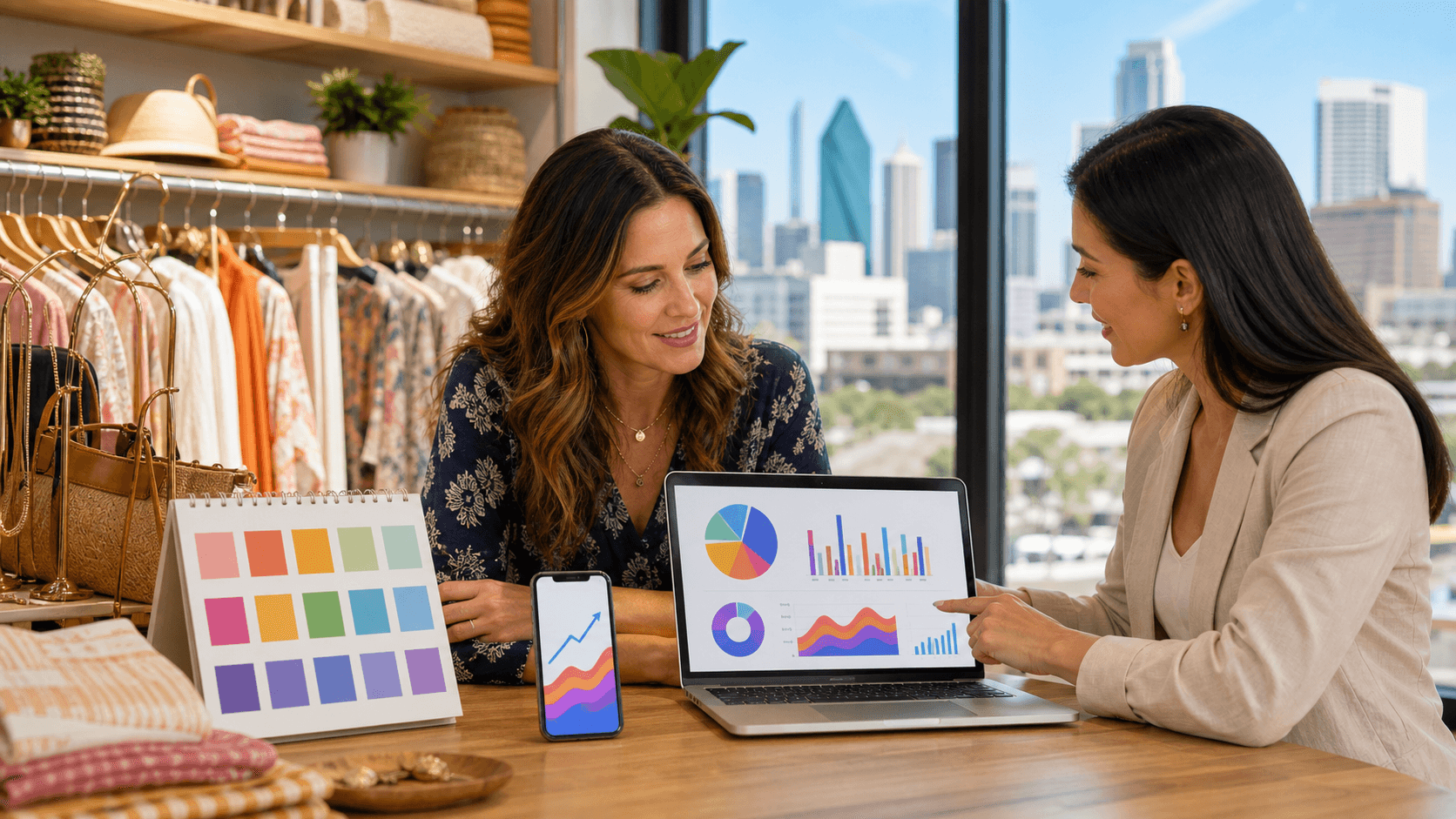
Turn PPC Clicks Into Real Local Customers
Paid search can bring a lot of clicks, but clicks do not pay your rent in Dallas. Store visits, service calls, and booked appointments do. If you run a local shop or service business, you need to know which Google Ads clicks turn into real customers walking through your door or calling your team. That matters even more as traffic picks up and competition gets tighter.
In this article, we walk through a simple tracking stack that ties your PPC clicks to real-world results. We use GCLID-based offline conversion imports, CallRail call tracking, and GA4 events working together. When this is set up, you can prove which campaigns are driving true business growth, not just website activity.
Why Local PPC in Dallas Needs Offline Tracking
Dallas, Fort Worth is packed with home service companies, medical offices, restaurants, retail stores, and local pros. Many of them are buying PPC clicks. If you only look at clicks, cost per click, and click-through rate, you are guessing with your budget. Those numbers do not show what happens once the click is over.
For local businesses, the real wins are offline conversions, like:
- In-store purchases after someone looks you up on Google
- Signed service agreements after a quote that started from a form
- Booked appointments from phone calls that came from search ads
- Showroom or office visits that began with a local search
This is why offline tracking fits so well with measurable marketing. At Ad Pages Solutions, our direct mail and digital advertising are built to drive clear, trackable responses. When you connect your PPC, your calls, and your in-person results, you can align everything around one goal: more local traffic that you can actually count.
Mapping the Customer Journey From Ad Click to Store Visit
Here is what a common path looks like for a Dallas-area customer:
- Someone searches for a local service on Google
- They tap your PPC ad and land on your page
- They call the number on the page or fill out a short form
- Your team talks with them, gives a quote, or books a time
- They visit your store, office, or get service at their home
The problem is that standard PPC reports usually stop right after the click or the form submission. They cannot see your point-of-sale system, your signed agreement, or whether that appointment actually showed up and paid.
When you bring every touchpoint into GA4, your view changes. You can track:
- First click and keyword
- Landing page views and on-site behavior
- Call events and form submissions
- CRM stages, like lead, quote, and closed sale
- Final revenue, tied back to the original ad and search term
With that full path, PPC management in Dallas becomes far more data-driven. You are not just pausing ads based on weak click numbers; you are making changes based on which keywords and messages bring in real paying customers.
Building Your GCLID and Offline Import Foundation
GCLID sounds technical, but the idea is simple. Google adds a unique ID to your ad URLs. Every time someone clicks your ad, that GCLID can be captured. If you hang on to it all the way through your CRM or booking tool, you can later send closed deals back into Google Ads as offline conversions.
Here is the basic setup:
- Turn on auto-tagging in Google Ads so GCLIDs are added to URLs
- Update your website forms so they capture the GCLID from the URL
- Store the GCLID in your CRM, booking software, or lead sheet
- Make sure fields like time, value, and conversion type fit Google's offline import format
Once this is in place, you can regularly upload a list of closed jobs, visits, or purchases with their matching GCLIDs. Google Ads then learns which clicks led to real outcomes. The payoff is:
- Smarter automated bidding that aims for revenue, not just leads
- Clear reports that show which campaigns, ads, and keywords created sales
- Better budget shifts across Dallas locations, based on business impact
Connecting CallRail, Calls, and GA4 for Local Insight
For many local companies, calls are everything. HVAC, roofing, dental, legal, med spa, and other service businesses often close the deal on the phone. If you are not tracking which ads drove those calls, you are missing a big part of the picture.
CallRail helps fill that gap. It works like this:
- Dynamic number insertion (DNI) swaps your phone number on the site with a tracking number based on the traffic source
- Each call is tied back to the specific Google Ads click and landing page visit
- Call events can be sent into GA4 as conversions or micro-events
- You can flag high-quality calls, like new leads or booked appointments
To go even deeper, you can line up CallRail data with your GCLID and CRM records. When a call leads to a booked job, new patient, or large purchase, that result can be matched back to the original ad click. Then you can upload that as an offline conversion into Google Ads. This closes the loop between click, call, and cash in the register.
Proving Incremental Lift with a Unified Data Stack
Once everything is tracked, the big question is: what extra results is PPC really creating? That extra effect is called incremental lift. It shows the difference between what would have happened anyway and what only happened because of your ads.
You can test lift in a few simple ways:
- Geo-based tests: compare similar service areas, one with PPC and one without
- Time-based tests: pause or scale back in certain time windows and watch the change in calls and store traffic
- Control vs test campaigns: keep a baseline campaign steady while you adjust another, measuring the lift in conversions
By feeding GA4, offline imports, CallRail, and CRM data into one view, you can see which pieces of your PPC are moving the needle. As patterns show up, you can:
- Shift budget into the highest-performing keywords and audiences
- Adjust ad copy and offers to create more calls and visits
- Tune landing pages that turn more of those clicks into store-ready leads
Turning Tracking Wins Into Smarter Local PPC Decisions
When you build this tracking stack, you are not just setting up a one-time project. You are building a long-term asset for your Dallas business. Every season, as demand changes, you can watch your data, not your hunches, and keep your PPC pointed at what actually drives new customers.
Good next steps for most local teams are simple:
- Audit what you are tracking today, especially calls and forms
- Prioritize call tracking and form tracking so no lead slips by unseen
- Add GCLID capture to your forms and lead flow
- Plan a test window to measure lift in store visits and calls with your new setup
At Ad Pages Solutions, we focus on measurable local marketing, from our coupon magazine to digital and PPC services. When online clicks, phone calls, and offline sales all line up, it becomes much easier to grow with confidence in a busy market like Dallas.
Get Started With Your Project Today
If you are ready to attract more qualified leads and get clearer insight into your ad performance, our team at Ad Pages Solutions is here to help. Let us handle the strategy, setup, and optimization so you can focus on running your business while your campaigns work harder for you. Take the next step toward more efficient advertising by exploring our PPC management in Dallas solutions tailored to your goals.